| TubeRadioLand:Home > Philco > 111 |
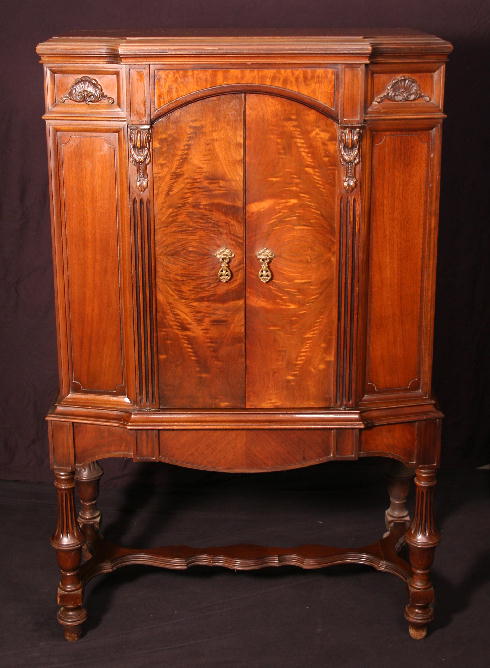
Philco Model 111 HighBoy Console Radio (1931)
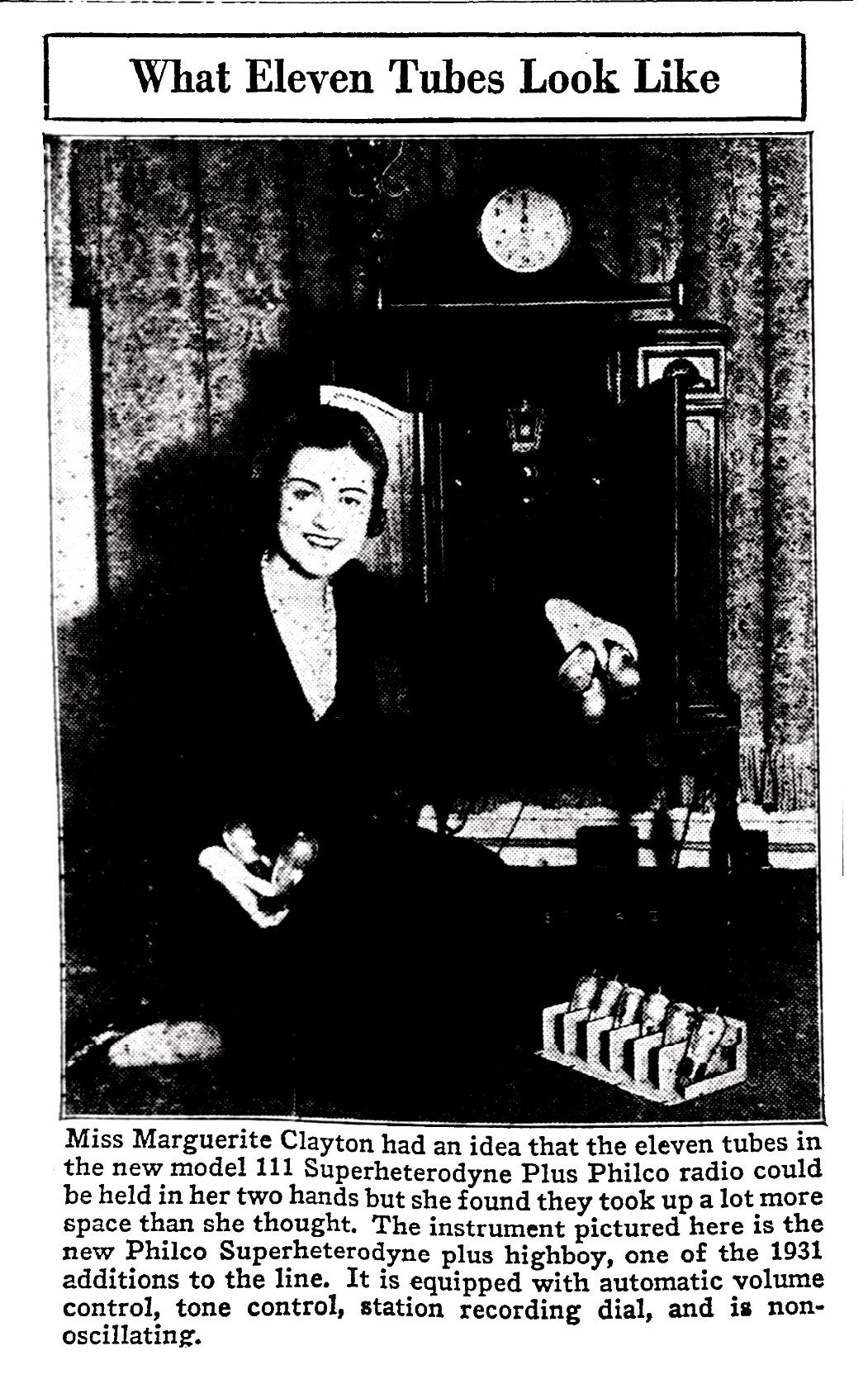
The Philco 111 Highboy was introduced in January
of 1931 and, as had become the norm, was heavily
promoted by both the company and its local dealers
and retailers. It, the 111 lowboy, and a radio phono-
graph were Philco's first superheterodyne radios,
using their newly developed 11-tube Superhetero-
dyne-Plus chassis. Never before such a radio as
this, they proclaimed, Combining the exclusive
Philco balanced-unit screen-grid circuit with the
superheterodyne, to do things no other receiver
can do. As with their Neutrodyne-Plus and Screen-
Grid-Plus receivers before it, they used the word
"Plus" in referring to the 111's circuitry. What is the
meaning of the "Plus" in Superheterodyne-Plus? I'll
let them explain in words from their advertising:-
of 1931 and, as had become the norm, was heavily
promoted by both the company and its local dealers
and retailers. It, the 111 lowboy, and a radio phono-
graph were Philco's first superheterodyne radios,
using their newly developed 11-tube Superhetero-
dyne-Plus chassis. Never before such a radio as
this, they proclaimed, Combining the exclusive
Philco balanced-unit screen-grid circuit with the
superheterodyne, to do things no other receiver
can do. As with their Neutrodyne-Plus and Screen-
Grid-Plus receivers before it, they used the word
"Plus" in referring to the 111's circuitry. What is the
meaning of the "Plus" in Superheterodyne-Plus? I'll
let them explain in words from their advertising:-
...never before such a radio as this.
Philco 111 - 11 tubes Superheterodyne-Plus.
Other features of the 111 include
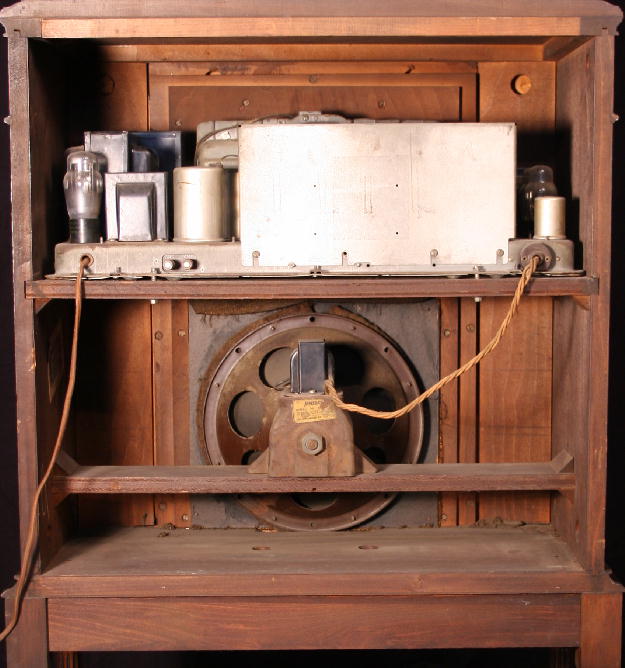
The tube line-up is 24 (RF), 27 (LO), 24 (mixer/1st
detector), 24(1st IF), 24(2nd IF), 27 (detector), 27
(detector amp), 27 (af amp), 45*2 (push-pull power
amp), 80 (rectifier). The schematic is available here,
courtesy of NostalgiaAir.org. For an explanation of
the model 111's detector and detector amp stages,
see the description at the bottom of this page.
The 111 High Boy cabinet is made of figured walnut
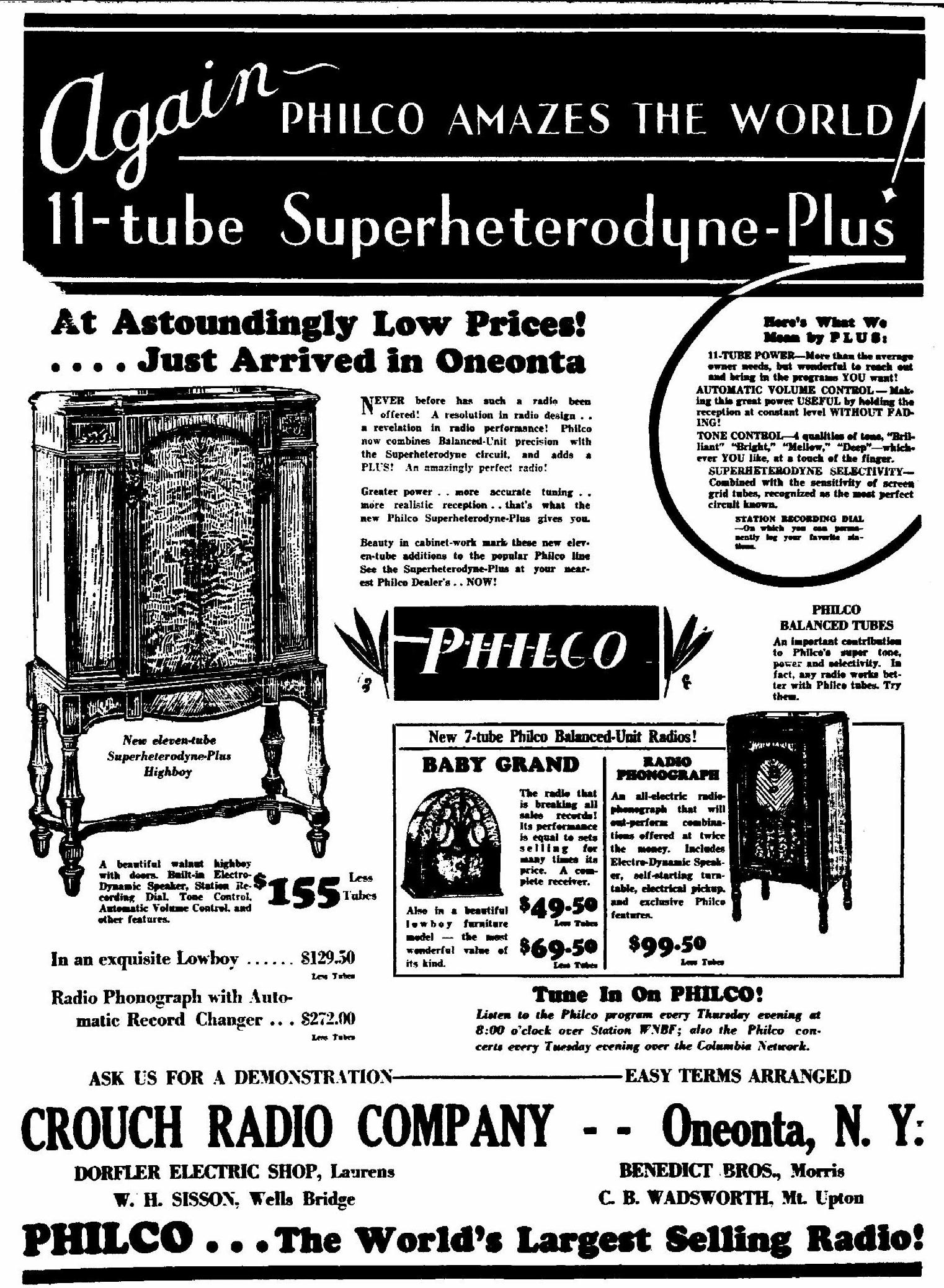
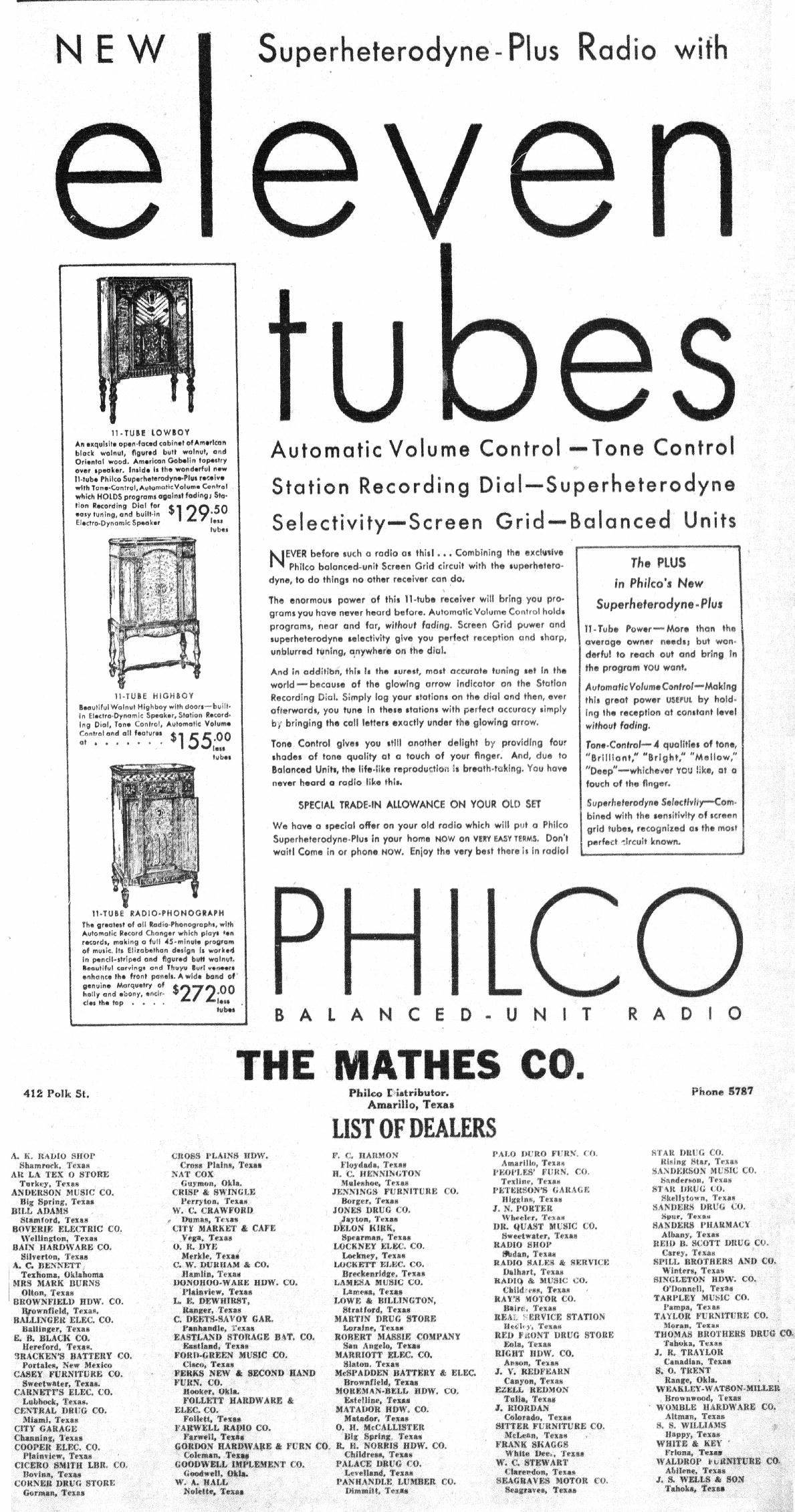
and the radio had an original sales price of $155,
less tubes. You could buy the set complete to your
aerial with Philco balanced unit tubes for the
princely sum of $173.
I found this at an outdoor flea market during the
summer of 2004 - the seller had it standing out in
the early morning mists at 6am. Finding it there
quite made my day!
Below is a transcript of a discussion by Walter E.
Holland, Chief Engineer of the Philadelphia Stor-
age Battery Co., describing the meaning of Philco's
'detector' and 'detector amp' stages. He overviews
the circuit developed by H. Wheeler of Hazeltine
Corporation that would eventually be used by most
receivers through the end of the tube era (the two
stages would eventually be combined into one
combination tube, such as the 12SQ7).
- Philco's station recording dial with glowing
arrow indicator for the surest and most
accurate tuning radio in the world. This
dial allowed the listener to use a pencil to
mark the precise location of favorite stations
on the dial, there- by allowing stations to be
rapidly relocated following changes to the
tuning. - Tuned RF stage, with dual input tuning and
four gang tuning condenser - Dual IF stages
- push-pull 245 output stage
- built-in electrodynamic speaker
- a local/distant ("range") switch, located on
the chassis and accessible from the rear. - Frequency coverage from 550kc to 1500kc
on the standard broadcast band
The tube line-up is 24 (RF), 27 (LO), 24 (mixer/1st
detector), 24(1st IF), 24(2nd IF), 27 (detector), 27
(detector amp), 27 (af amp), 45*2 (push-pull power
amp), 80 (rectifier). The schematic is available here,
courtesy of NostalgiaAir.org. For an explanation of
the model 111's detector and detector amp stages,
see the description at the bottom of this page.
The 111 High Boy cabinet is made of figured walnut
and the radio had an original sales price of $155,
less tubes. You could buy the set complete to your
aerial with Philco balanced unit tubes for the
princely sum of $173.
I found this at an outdoor flea market during the
summer of 2004 - the seller had it standing out in
the early morning mists at 6am. Finding it there
quite made my day!
Below is a transcript of a discussion by Walter E.
Holland, Chief Engineer of the Philadelphia Stor-
age Battery Co., describing the meaning of Philco's
'detector' and 'detector amp' stages. He overviews
the circuit developed by H. Wheeler of Hazeltine
Corporation that would eventually be used by most
receivers through the end of the tube era (the two
stages would eventually be combined into one
combination tube, such as the 12SQ7).
| The Plus in Philco's New Superheterodyne-Plus 11-tube Power - More than the average owner needs, but wonderful to reach out and bring in the program you want. Automatic Volume Control - Making this great power Useful by holding the reception at constant level without fading. Tone Control - Four qualities of tone, "Brilliant", "Bright", "Mellow", "Deep" - Whichever you like, at the touch of a finger Superheterodyne Selectivity - Combined with the sensitivity of screen-grid tubes, recognized as the most perfect circuit known. |
| The Philco "Multiplex Detector" "The two type 227 tubes which are used in our "multiplex detector" circuit separate the rectifying and amplifying functions of the usual single detection tube, and provide the means for automatically changing the bias of the control-grids of the radio frequency tubes to give automatic volume control. The first of these tubes has the grid and plate coupled together and acts as a true two-element rectifier, while the second has its grid directly coupled through a resistance to the grid and plate of the first tube so that it fulfills the audio amplifying functions of a detector independently of the first tube. It is for this reason that we call the second tube a "detector amplifier" The first tube might be called a "detector rectifier" but we prefer to merely call it the "detector tube". Since it is a two-element rectifier it gives true linear detection without overloading on all signals impressed on it by the radio frequency amplifier" |
Copyright TubeRadioLand.com

Jan 8th 1931, NY
Jan 7th 1931, Tx
Feb 6th 1931, Wa
click any thumbnail to enlarge