| TubeRadioLand:Home > Philco > 70 Baby Grand |
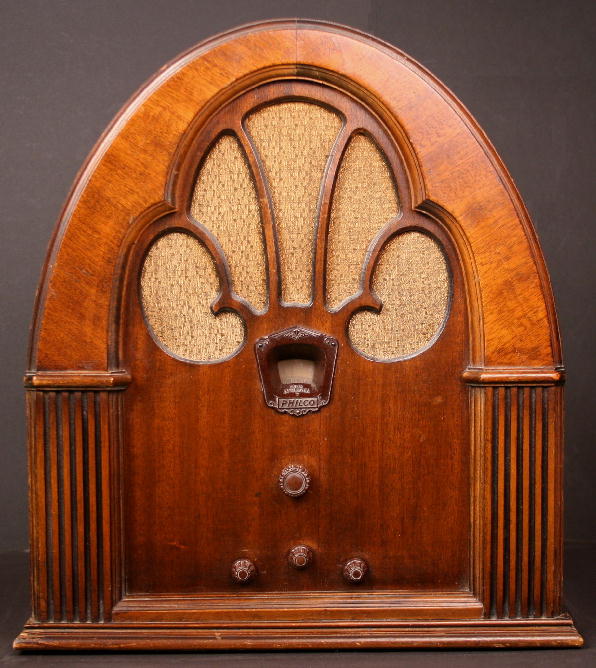
Philco Model 70 Baby Grand Cathedral Radio (1931)
The Philco Model 70 Baby Grand was first offered for
sale in June of 1931, along with its bigger brother the
model 90. It employed Philco's 7-tube balanced super-
heterodyne chassis, the entry level offering in their line
of 7, 9 and 11 tube superheterodynes available that
June.
As usual, Philco worked hard to foster the notion that
their sets offered something more than those of the
other manufacturers of the day. One way they did this
was through the liberal use of the word "plus" in their
advertising. It was a strategy that had proven success-
ful in the past with their "neutrodyne plus" and "screen
grid" plus, and so now came "superheterodyne plus".
Although strictly this referred only to their 11-tube sets,
they nevertheless also used the word "plus" when pro-
moting their lower tube count models, combining it with
"balanced", another of their favorite buzz words, as
seen in the following extract clipped from Baby Grand
advertising:-
sale in June of 1931, along with its bigger brother the
model 90. It employed Philco's 7-tube balanced super-
heterodyne chassis, the entry level offering in their line
of 7, 9 and 11 tube superheterodynes available that
June.
As usual, Philco worked hard to foster the notion that
their sets offered something more than those of the
other manufacturers of the day. One way they did this
was through the liberal use of the word "plus" in their
advertising. It was a strategy that had proven success-
ful in the past with their "neutrodyne plus" and "screen
grid" plus, and so now came "superheterodyne plus".
Although strictly this referred only to their 11-tube sets,
they nevertheless also used the word "plus" when pro-
moting their lower tube count models, combining it with
"balanced", another of their favorite buzz words, as
seen in the following extract clipped from Baby Grand
advertising:-
...a superheterodyne receiver PLUS balanced units PLUS balanced tubes.
| "At Last! A radio that truly meets the modern demand for performance, a superheterodyne receiver PLUS balanced units PLUS balanced tubes. ... Remember, superheterodyne is not enough. It takes Philco's BALANCED superheterodyne to meet the modern demands of crowded broadcasting conditions". |
The model 70, with a purchase price of $49.95 com-
plete with tubes, would go on to sell almost 300,000
sets - another huge triumph for Philco, following the
runaway success of the model 20 the previous year.
That set had been advertised at the same price as
the model 70, but that was without tubes. Moreover,
buyers were now getting superior superheterodyne
performance along with improved sound quality. Such
was the rate of advancement of the state of the art.
The stylish cabinet was designed for Philco by Ed-
ward Combs and used first in March of 1931 for the
model 21. However with the debut of the 70 & 90 in
June the 21 was discontinued, with the result that it's
by far the rarest of the 21, 70, 90 trio today. Combs'
cabinet has gone on to become one of the most well-
known and iconic of all cabinet designs from the tube
radio era. A copy of the Combs design patent can be
seen here.
The 70 was available in either walnut or mahogany
veneer. The one here is, I believe, mahogany.
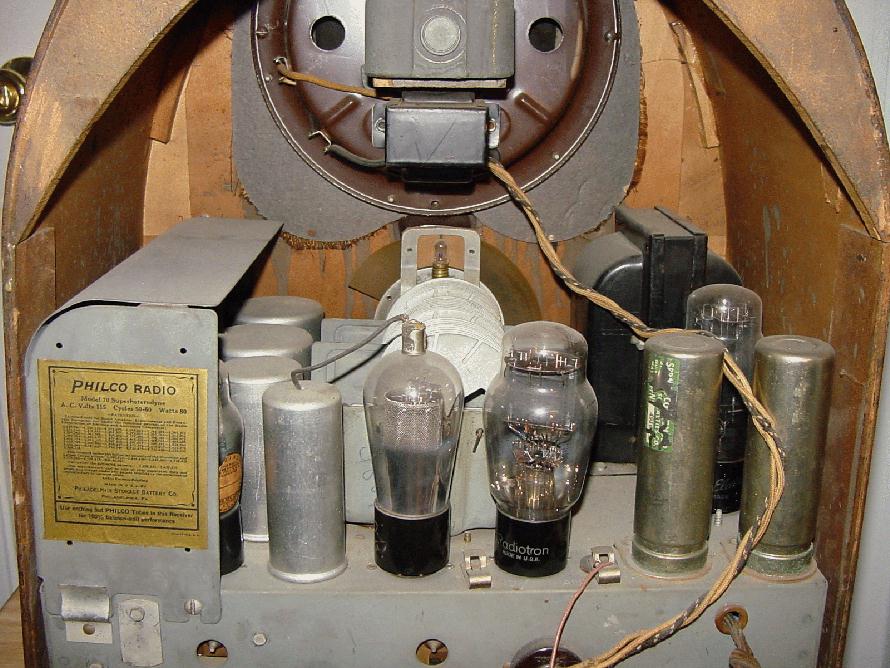
The model 70 covers the standard broadcast band
from 550 to 1500 kcs. For initial production, through
until early 1932, the 70 used a type I chassis having
tube complement 24 (RF amp), 24 (mixer), 27 (LO),
24 (IF amp), 24 (2nd detector), 47 (audio pentode)
and 80 (rectifier). It did not use the Philco "multiplex
detector" and therefore did not provide automatic vol-
ume control (AVC). Later production, above serial
number B-22,000, adopted an improved chassis that
did feature the "multiplex detector" for AVC, along
with variable-mu tubes. Tube line-up for this type II
chassis is 35 (RF), 24 (mixer/LO), 35 (IF), 27 (detect-
or-rectifier), 35 (detector-amp), 47 (AF amp) and 80
(rectifier). The mixer and LO, which used separate
tubes in the earlier chassis, were combined into one
self-oscillating type 24 (autodyne) stage and the 2nd
detector was reconfigured to use a detector-rectifier
and detector-amp for the AVC. For a description
Philco's "multiplex detector" see my Philco 111 page.
My model 70 has the more common early version of
the chassis, with no AVC. The schematic may be
found here, courtesy of NostalgiaAir.
plete with tubes, would go on to sell almost 300,000
sets - another huge triumph for Philco, following the
runaway success of the model 20 the previous year.
That set had been advertised at the same price as
the model 70, but that was without tubes. Moreover,
buyers were now getting superior superheterodyne
performance along with improved sound quality. Such
was the rate of advancement of the state of the art.
The stylish cabinet was designed for Philco by Ed-
ward Combs and used first in March of 1931 for the
model 21. However with the debut of the 70 & 90 in
June the 21 was discontinued, with the result that it's
by far the rarest of the 21, 70, 90 trio today. Combs'
cabinet has gone on to become one of the most well-
known and iconic of all cabinet designs from the tube
radio era. A copy of the Combs design patent can be
seen here.
The 70 was available in either walnut or mahogany
veneer. The one here is, I believe, mahogany.
The model 70 covers the standard broadcast band
from 550 to 1500 kcs. For initial production, through
until early 1932, the 70 used a type I chassis having
tube complement 24 (RF amp), 24 (mixer), 27 (LO),
24 (IF amp), 24 (2nd detector), 47 (audio pentode)
and 80 (rectifier). It did not use the Philco "multiplex
detector" and therefore did not provide automatic vol-
ume control (AVC). Later production, above serial
number B-22,000, adopted an improved chassis that
did feature the "multiplex detector" for AVC, along
with variable-mu tubes. Tube line-up for this type II
chassis is 35 (RF), 24 (mixer/LO), 35 (IF), 27 (detect-
or-rectifier), 35 (detector-amp), 47 (AF amp) and 80
(rectifier). The mixer and LO, which used separate
tubes in the earlier chassis, were combined into one
self-oscillating type 24 (autodyne) stage and the 2nd
detector was reconfigured to use a detector-rectifier
and detector-amp for the AVC. For a description
Philco's "multiplex detector" see my Philco 111 page.
My model 70 has the more common early version of
the chassis, with no AVC. The schematic may be
found here, courtesy of NostalgiaAir.
| "pentode output tube for extra power, tone control, electro- dynamic speaker and illuminated station-recording dial". |
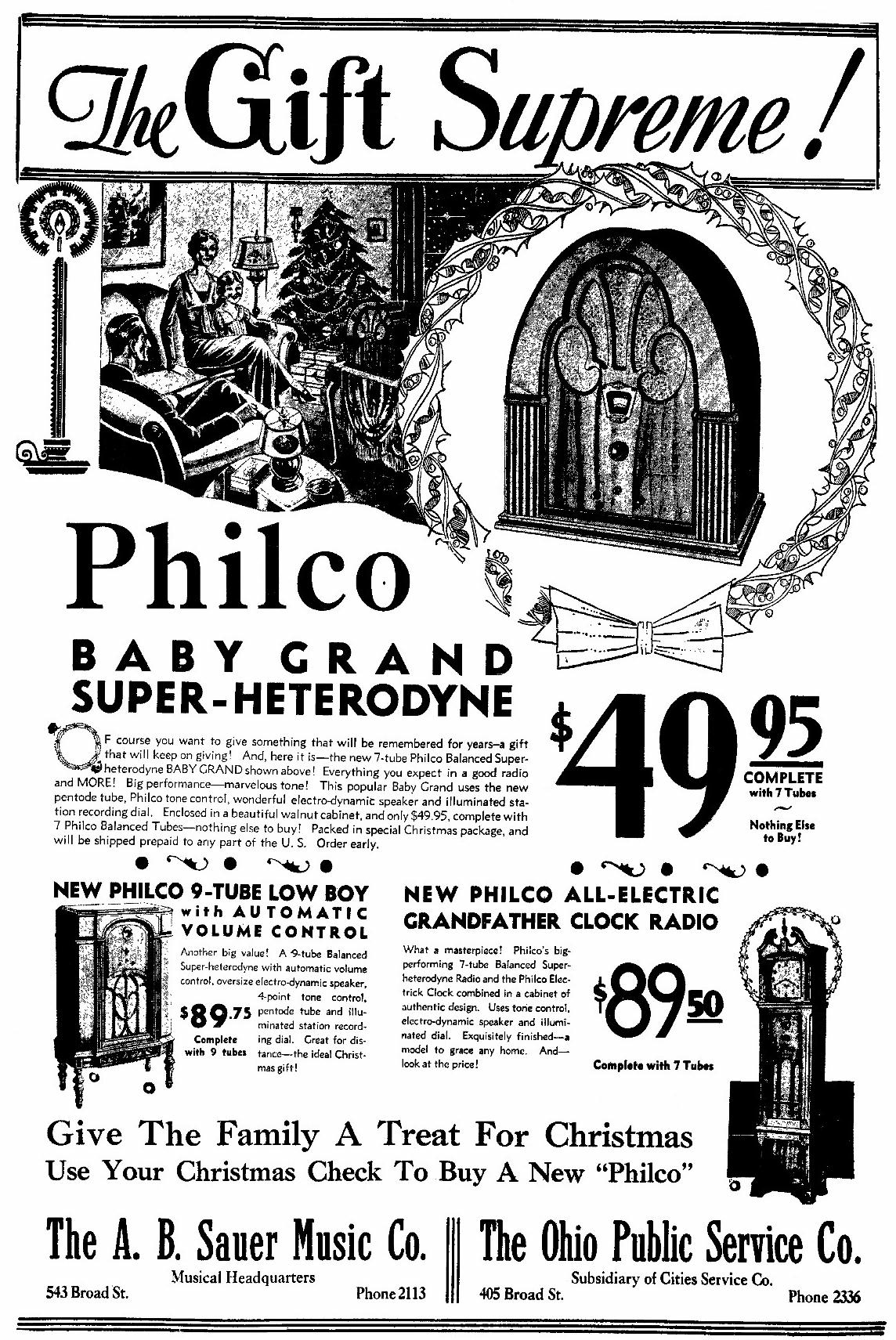
Dec 10th 1931
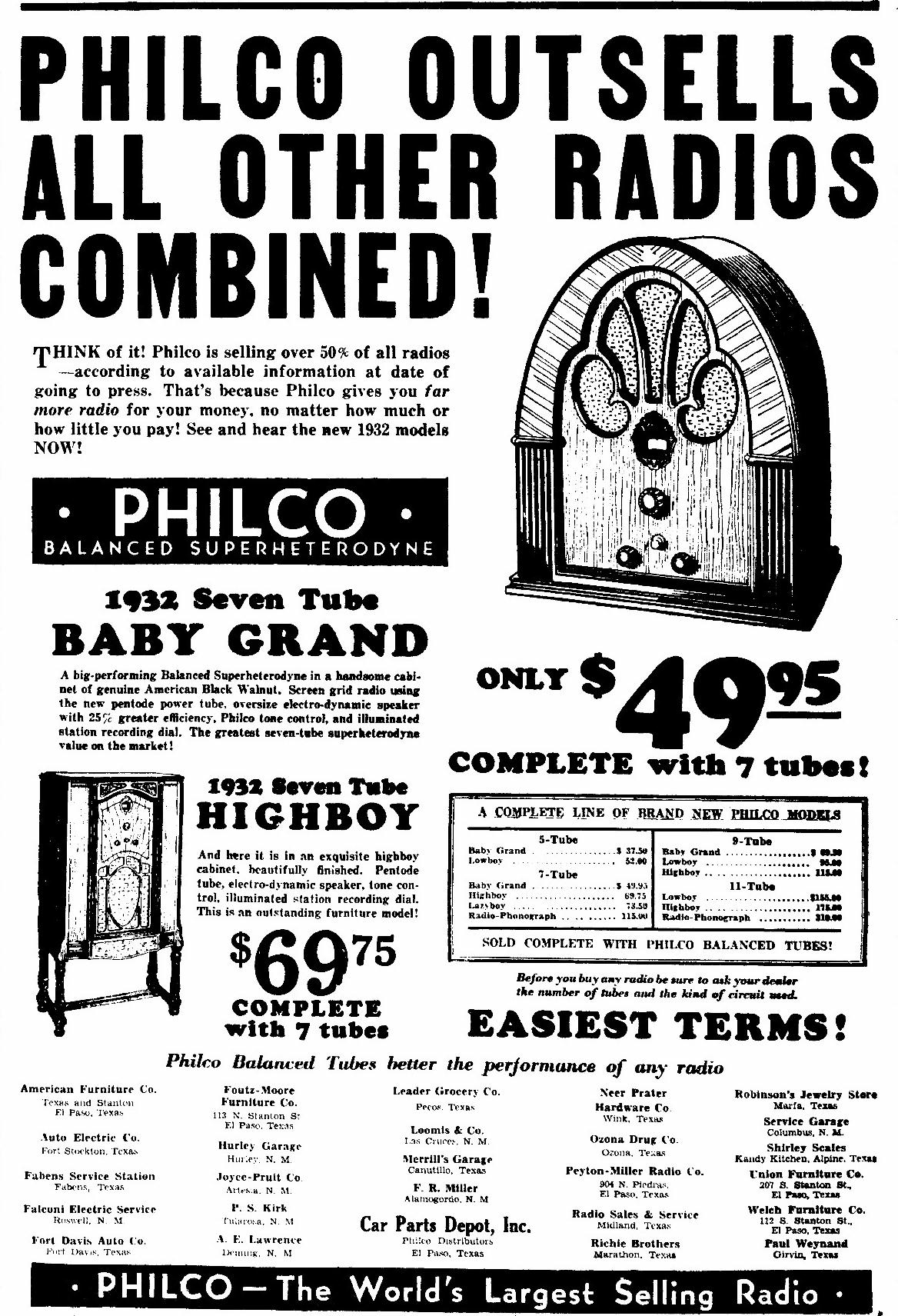
Oct 14th 1931
Copyright TubeRadioLand.com
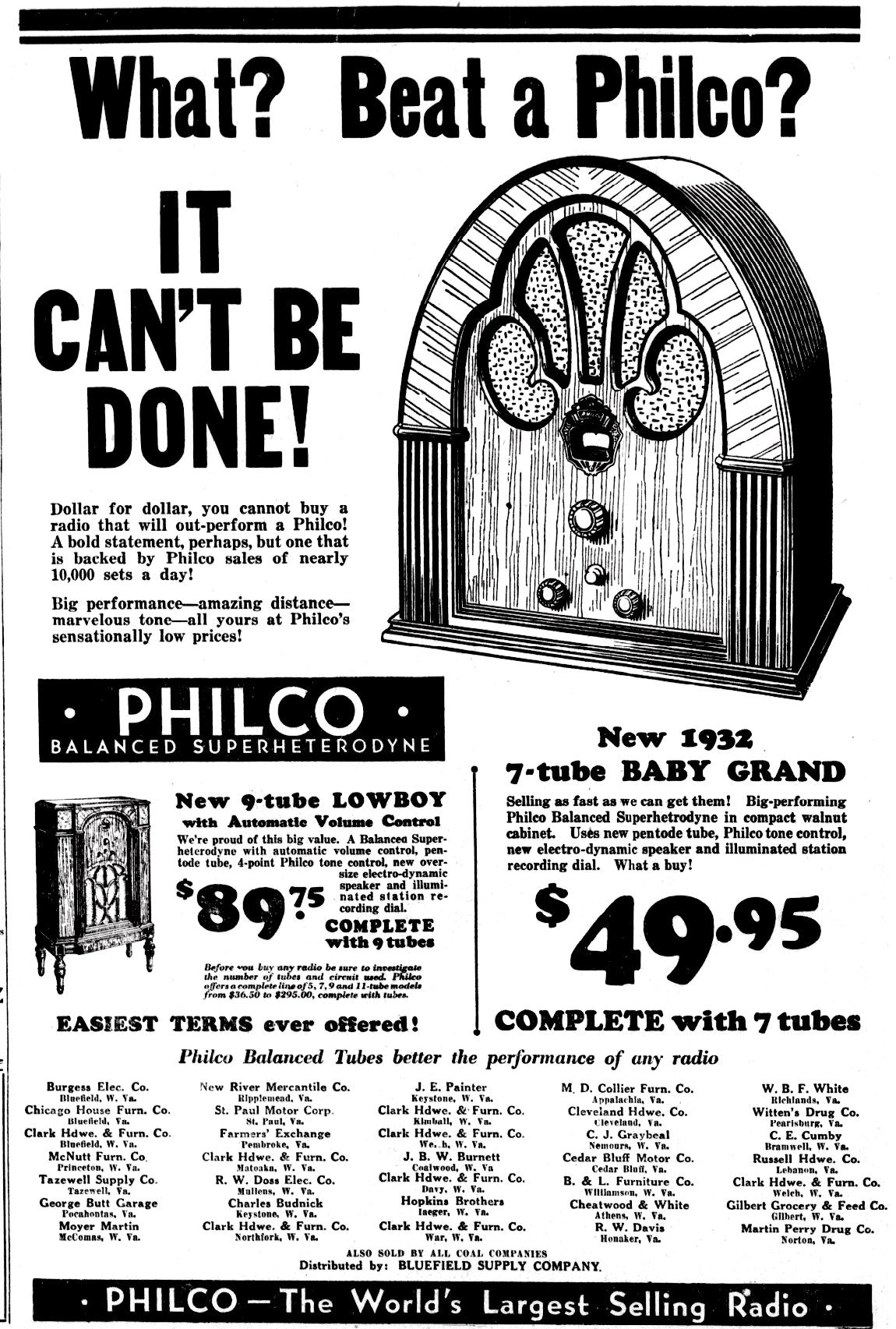
Nov 1st 1931, West Va
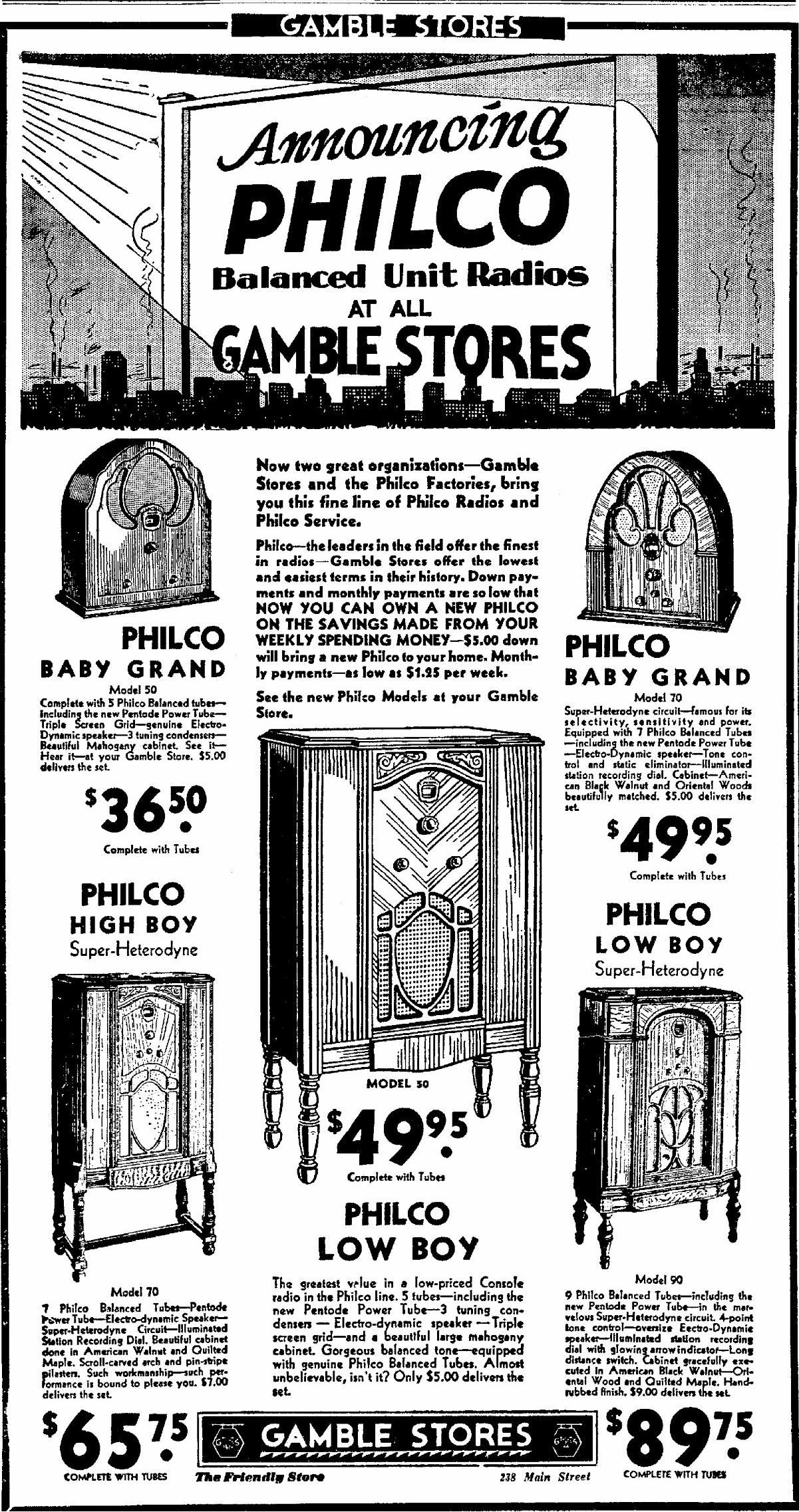
Nov 5th 1931, WI
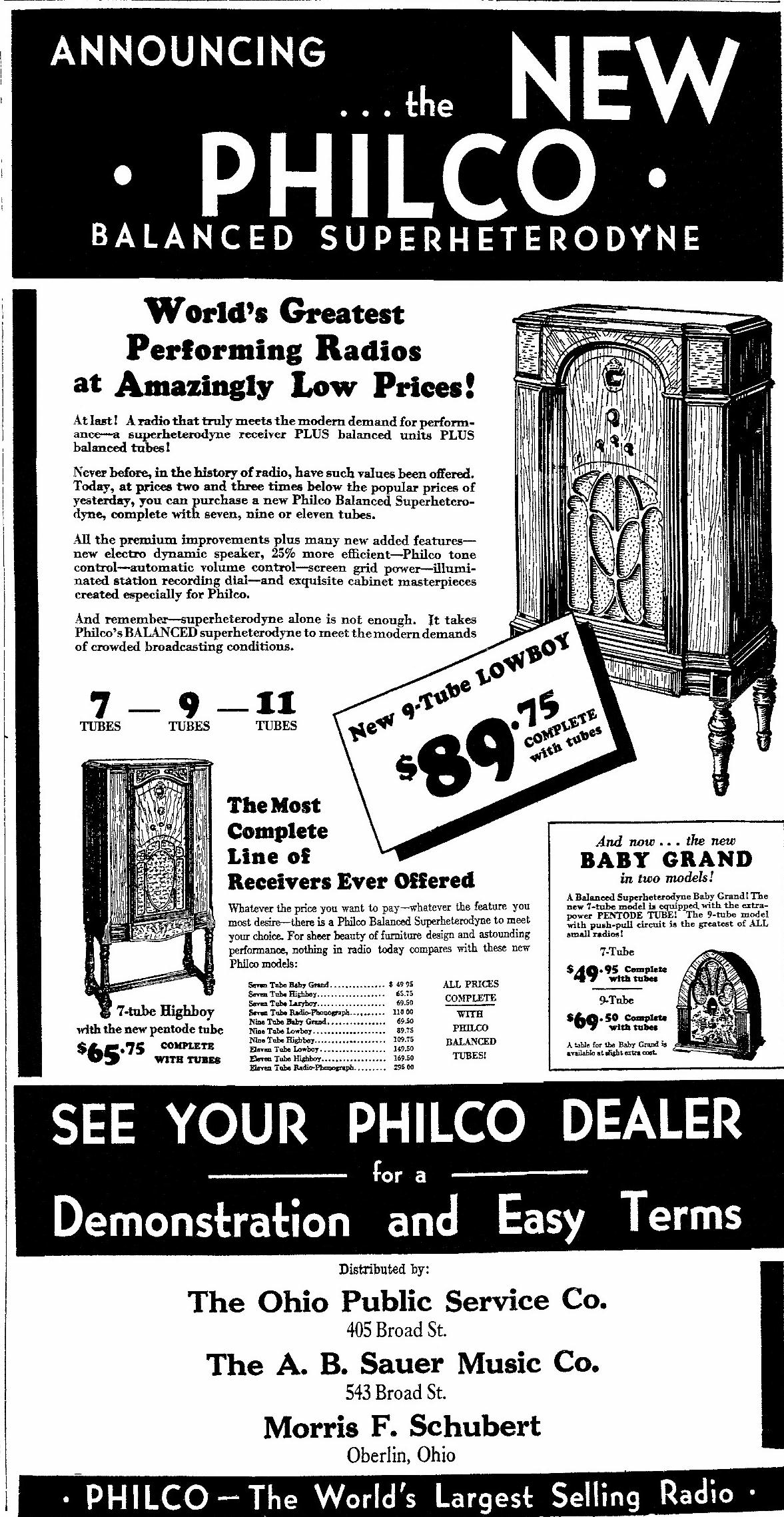
June 26th 1931, Ohio
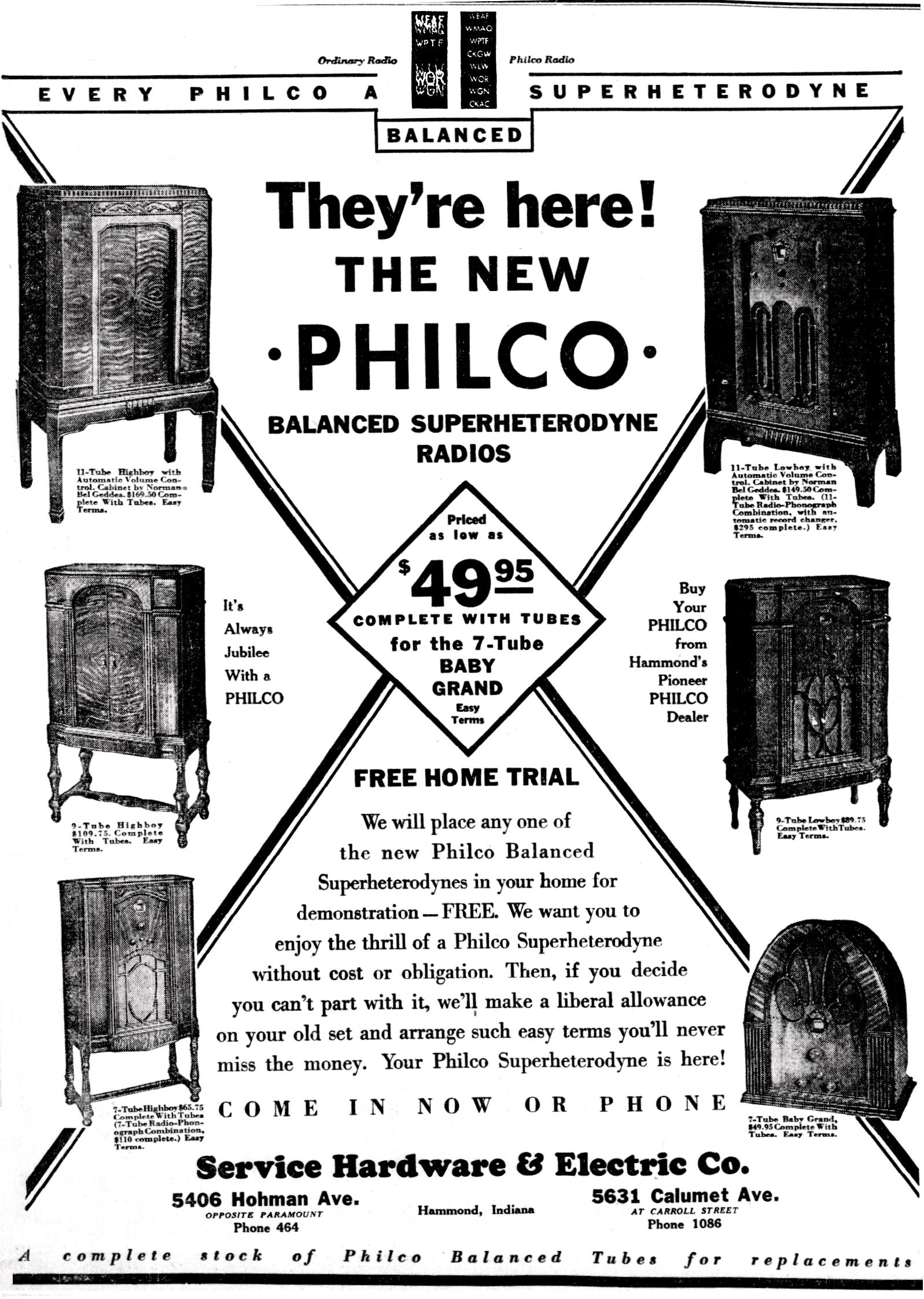
June 26th 1931, Indiana
click any thumbnail to enlarge